




The Million-Dollar Donut
A Business Case Study on How a $0.75 Product Generates Over $1.1M Annually
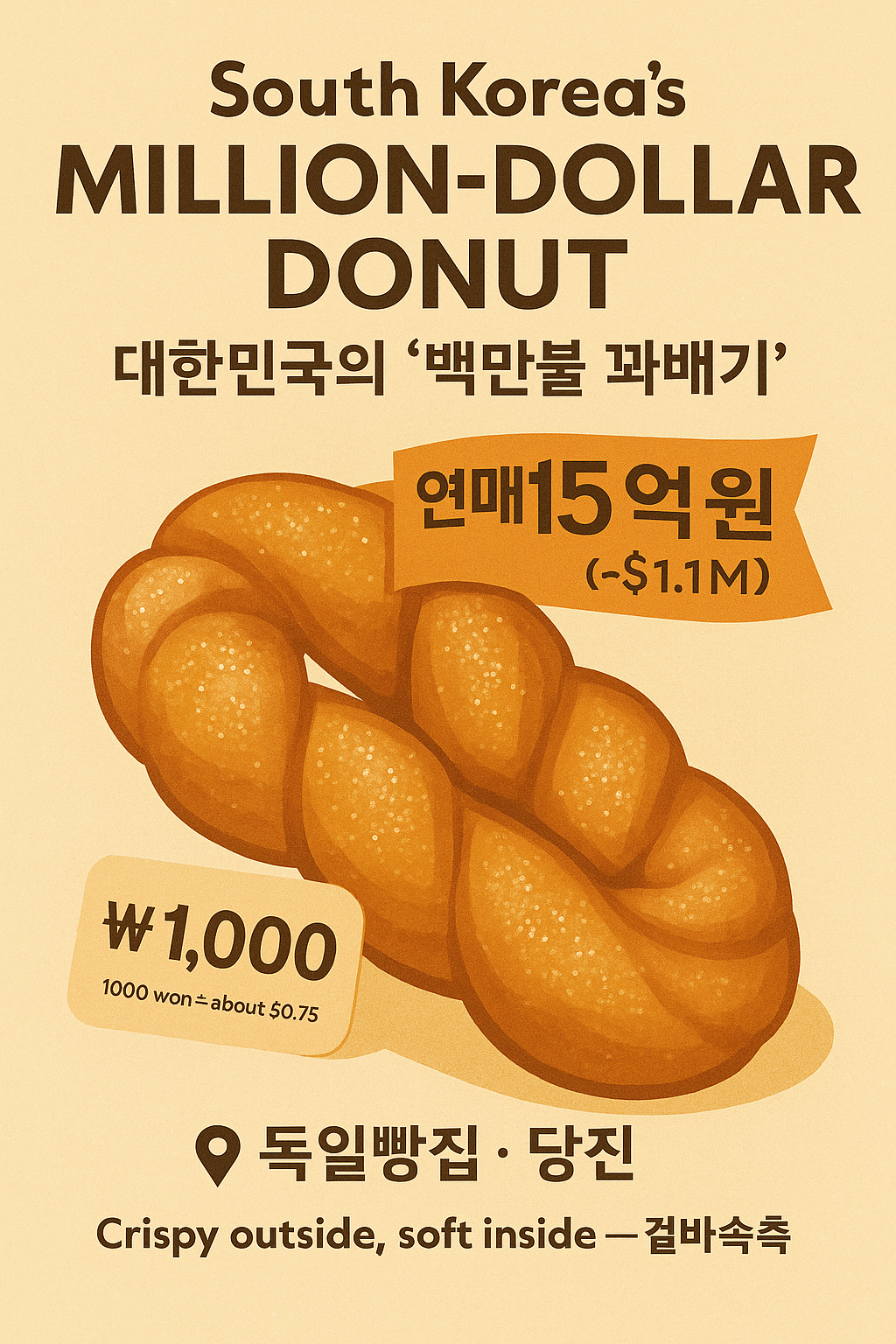
In the world of business, we often chase innovation and disruption. But what if one of the most brilliant business models is hiding in plain sight, in the form of a simple, $0.75 twisted donut? This is the story of "Dokil-ppangjip" (the German Bakery), a local powerhouse in Dangjin, South Korea, that has transformed a nostalgic snack into a multi-million-dollar revenue stream.
This isn't just a story about a delicious pastry. It's a masterclass in product strategy, operational efficiency, and brand building. Let's break down the key principles behind its staggering success.
Principle 1: Perfect the Core Product, Don't Dilute the Focus
The bakery's flagship product is the Kkwabaegi. While they offer other items, their fame and the vast majority of their sales come from perfecting this one single product.
The Unbeatable Value Proposition:
The product's success lies in a simple formula: **Exceptional Quality at an Impulse-Buy Price.** The texture—crispy outside, chewy and airy inside ("geot-ba-sok-chok")—far exceeds customer expectations for a sub-dollar snack. This high-quality, low-price combination makes the purchase decision frictionless for consumers.
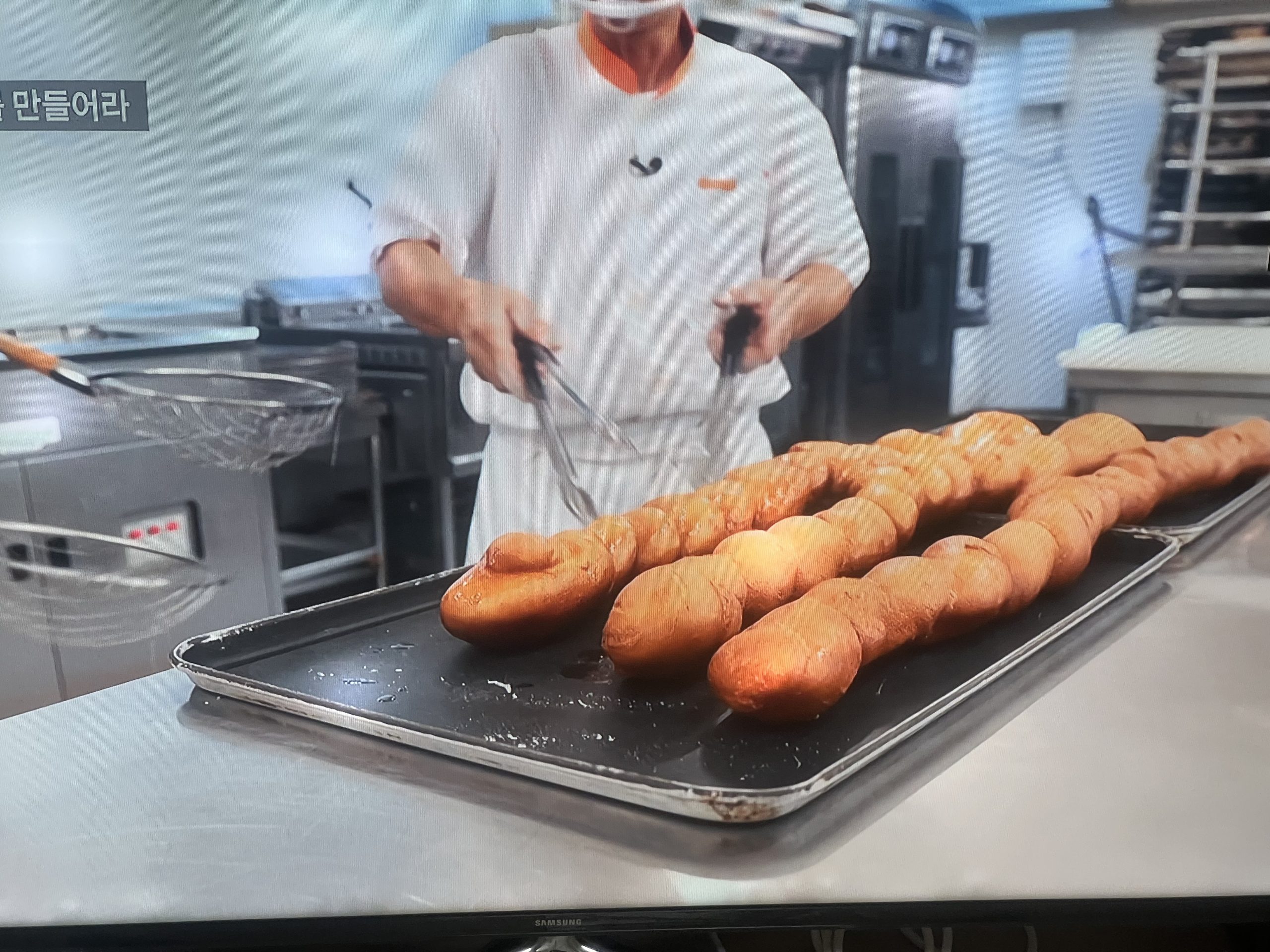
Consistency and quality at scale are central to the bakery's operational model.
Principle 2: Design for Scalable Simplicity
Selling a low-margin item requires immense volume. The bakery's entire workflow is engineered for high-throughput production. The process of twisting, frying, and sugaring the dough is repetitive, allowing for specialization and incredible speed without sacrificing quality. This is lean manufacturing applied to a traditional craft.
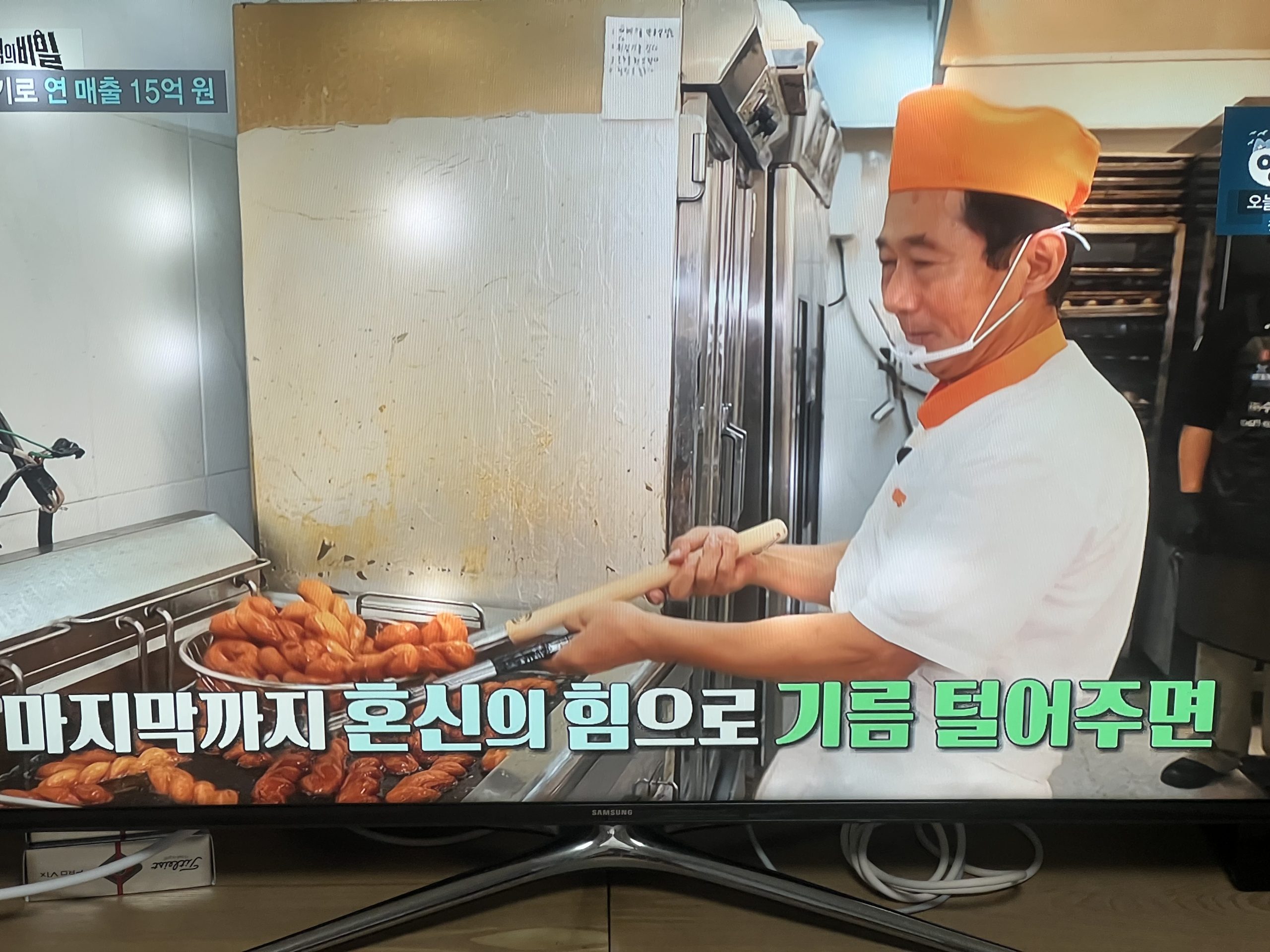
The production line is a model of efficiency, designed for high-volume output.
Principle 3: Leverage Authenticity as a Brand Moat
The name "German Bakery" itself is a piece of authentic branding. It taps into a post-war Korean history where "German" techniques signified quality and expertise. This historical authenticity, combined with decades of operation and numerous media features, creates a powerful brand story that new competitors cannot easily replicate.
Principle 4: Smart Market Segmentation Through Brand Extension
The existence of two distinct branches is a brilliant strategic move:
- Branch 1 (The Original): Caters to the takeaway, high-volume market. It reinforces the brand's authenticity and history.
- Branch 2 (The Café): Taps into the modern, "sit-down" café culture. It attracts a different demographic (families, couples) and increases the average spend per customer with beverage sales.
This dual-location strategy allows the business to capture two different market segments without compromising the core identity of either.
Key Business Takeaways
The German Bakery's success isn't magic; it's a result of deliberate strategy. The key lessons for any business are:
- Focus Obsessively: Do one thing better than anyone else.
- Create Irresistible Value: Exceed quality expectations at your price point.
- Build Efficiency for Scale: Your operations must support your pricing model.
- Grow Intelligently: Expand to new markets without losing your core identity.
While you might not be able to visit Dangjin to taste this success story yourself, understanding the Korean consumer's palate is a great start for anyone interested in this market. A fun way to do this is by trying a curated box of popular snacks, which you can explore and purchase here.
Ultimately, this bakery's success is a potent reminder that a winning business strategy doesn't always have to be complex. It can be rooted in the simple, unwavering execution of the fundamentals. This principle is deeply embedded in the Korean business landscape, where tradition and hyper-modernity often intersect in fascinating ways. To dive deeper into this unique cultural dynamic, I recommend reading my analysis on how K-pop, folklore, and global brands coexist in modern Korea.